
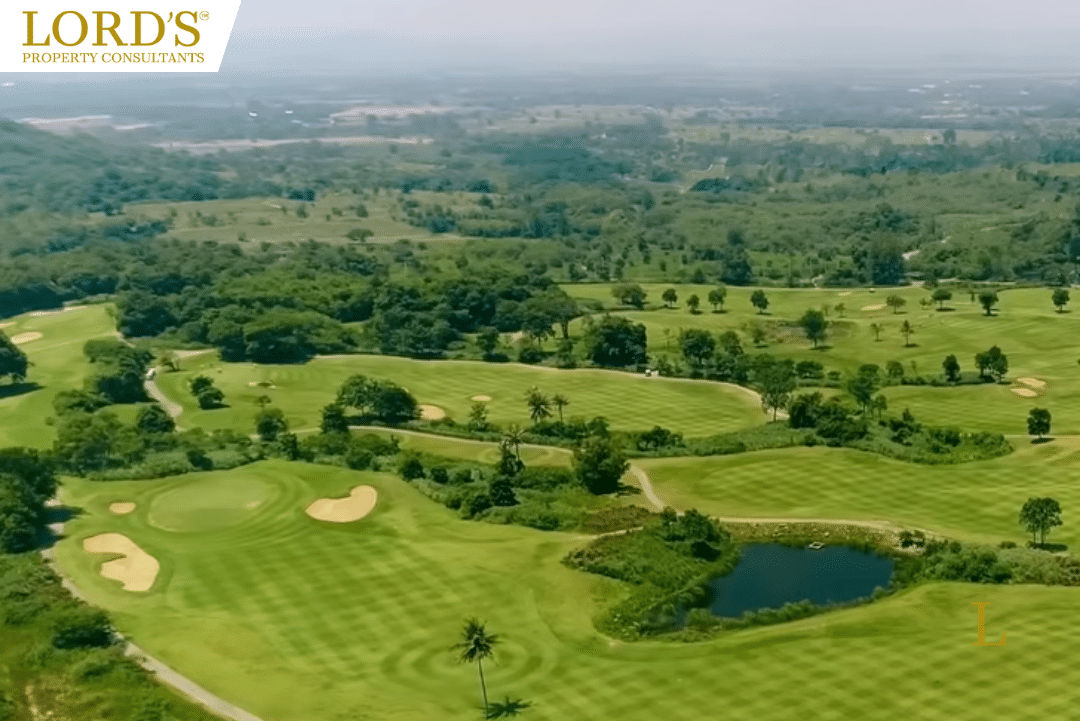
Almost every buyer I show around a Hua Hin golf estate is standing there in January, when the fairways are dry, the sky is blue and the whole place looks like a brochure. The honest question, and the one almost nobody asks until after they have signed, is what the same plot looks like in late September when 60 millimetres has fallen since breakfast. Below is what actually happens on Hua Hin’s golf estates during the wet months, what the drainage under your feet is doing, and how the cost of playing changes once you live here rather than visit.
When is the rainy season in Hua Hin?
Hua Hin’s rainy season runs from roughly mid-May to mid-October, with September and October the heaviest weeks. Rain usually arrives as short, intense afternoon downpours rather than all-day drizzle, so most days still hold several dry, playable hours.
The season is not a vague local impression. Thailand’s national forecasting body works to a fixed window, and the Thai Meteorological Department issues its rainy-season outlook for the period from mid-May to mid-October, timed to the arrival and retreat of the southwest monsoon. That monsoon carries moist air off the Indian Ocean, and its strength varies year to year, which is why one wet season feels barely noticeable and the next produces two or three memorable storms.
For a resident, the practical shape of the season matters more than the total rainfall. Mornings are usually clear. Tee times before 9am are rarely lost. What changes is the afternoon, and what changes for a homeowner is drainage load, humidity inside a closed-up villa, and the condition of the soi outside the estate gate.

Do golf estates in Hua Hin flood during the rainy season?
Hua Hin’s golf estates sit inland and generally uphill of the town centre, and they flood far less often than the urban core does. When Hua Hin does flood, the event is normally measured in hours rather than days.
The October 2024 episode is a useful benchmark because it was reported in detail. Persistent rain produced water 20 to 40 centimetres deep across parts of Cha-am and Hua Hin district, and a two kilometre section of the Phetkasem Highway in Hua Hin filled with water from around 4am but had drained and was dry by 10am. Six hours of disruption on the main north to south artery is a genuine inconvenience. It is not the multi-day inundation that buyers picture when they hear the word flooding, and it is a different category of event entirely from what southern Thailand experiences.
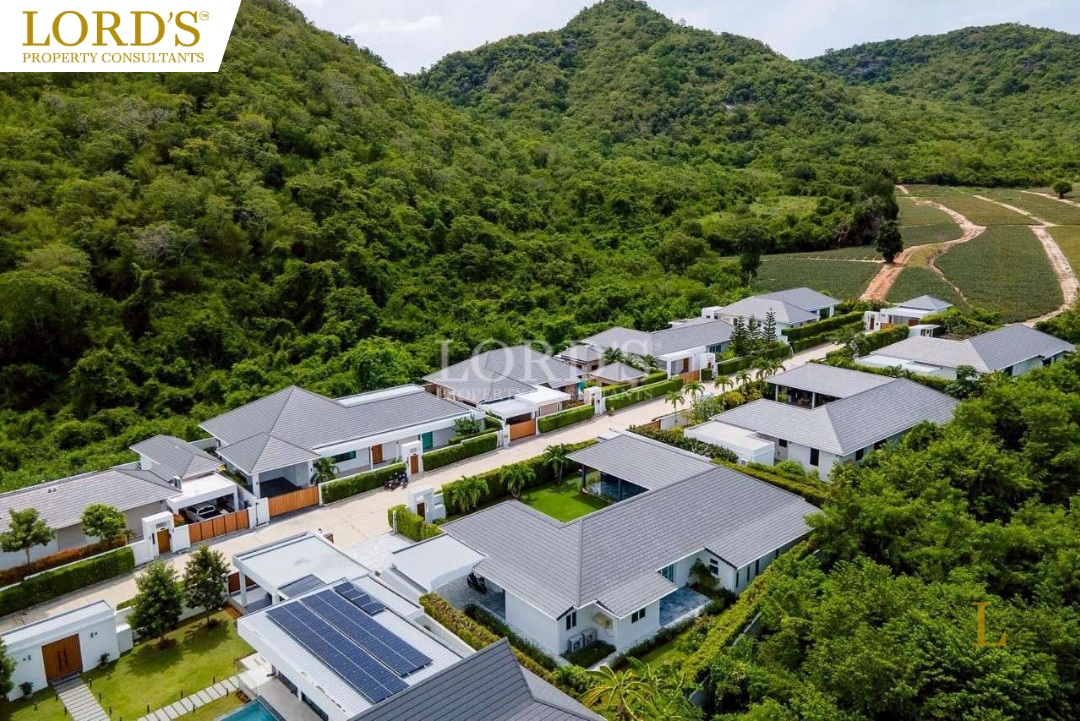
Risk inside Hua Hin is also not evenly spread. The town’s most flood-prone zones are the low-lying sois near the centre and the areas that sit downstream of the Takiab canal system. Golf estates west of Phetkasem Road sit higher, on land that was mostly pineapple plantation and scrub before it was developed, and they drain toward the town rather than receiving its water. That elevation difference is one of the quieter arguments for choosing inland property over beachfront in Hua Hin, and it is worth weighing against the trade-offs of living in the Hua Hin town centre, where you gain walkability and lose height above the water table.
None of that makes an estate automatically safe. Estates are large, and within a single development some plots sit at the natural low point of the site. Flood exposure is a plot-level question, not an estate-level one, which is also true of the wider security and infrastructure questions covered in our guide to whether Hua Hin golf estates are safe.
What makes one golf course drain faster than another?
Drainage speed comes down to soil type, surface grading and installed pipe, not to how expensive the clubhouse looks. Two courses ten minutes apart can differ by a full day in how quickly carts return to the fairways.
The engineering is well documented. Under a properly built fairway, drainage lines typically sit between 12 and 24 inches deep depending on the soil, with sandy soils drained at the shallower end and heavy clay requiring the deeper installations. Trenches need a minimum fall of one percent toward an outlet, and lines are commonly spaced 10 to 15 feet apart. Where full pipe systems are too disruptive, courses use narrow sand-filled channels six to ten inches deep, regular sand topdressing and aeration to keep water moving through the profile instead of sitting on it.
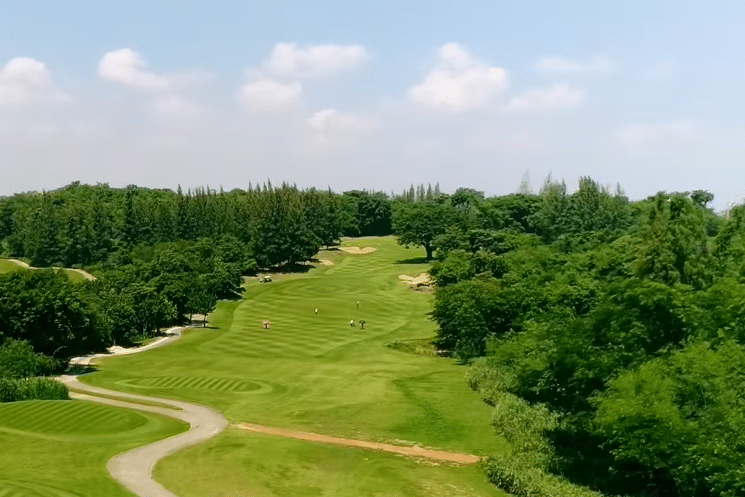
Translated into what you can see on a viewing, three things separate a fast-draining Hua Hin course from a slow one. The first is relief. Courses built into the foothills west of town shed water by gravity, which is why the elevated layouts recover in hours while flat inland tracks hold water in the low areas for a day or more. The second is subsoil. Land converted from pineapple plantation tends to sit on freer-draining ground than reclaimed paddy. The third is spending. Sand topdressing and aeration are annual costs, and a club that skips them will visibly soften year after year regardless of what was installed at construction.
The difference shows up in the property market too. It is one of the practical reasons the comparison between living at Palm Hills and Black Mountain is not just about price per square metre, and it is worth reading alongside our Pineapple Valley and Banyan property guide if those estates are on your shortlist.

Does the golf course protect the houses around it, or push water toward them?
A well-designed course acts as retention capacity for everything around it, absorbing runoff into lakes, swales and low rough before it reaches roads and houses. The same feature works against you if your plot sits below the fairway with nothing between you and it.
Hua Hin’s own authorities treat golf courses as flood infrastructure. In February 2026, the Utokapat Foundation and provincial officials began work at Royal Hua Hin Golf Course on a 2,200 metre water collection system feeding two storage ponds with a combined capacity of more than 27,000 cubic metres, built by the Royal Engineers of Phanu Rangsi Camp and scheduled for completion within 2026. The stated purpose is to stop runoff from higher ground overwhelming drainage around the railway station and the town centre, and to bank water for the dry season. When the province wants somewhere to put several thousand tonnes of storm water, it goes to a golf course.
That is the upside. The downside is geometry. Water leaving a fairway has to go somewhere, and on estates where villa plots were cut into the lower edge of a hole, the garden wall becomes the first obstacle the runoff meets.
I have talked clients out of plots for exactly this reason. On one estate a few years ago, a couple had fallen for a villa with a spectacular open view straight up a par five. Standing in the garden it was obvious the ground fell toward the terrace from three directions and the boundary had no bund, no cut-off drain and a single small outlet. The developer’s answer was that it had never been a problem. We walked to the two neighbouring plots and found silt lines on both boundary walls at roughly ankle height. They bought a plot two rows back on the same estate for slightly less money and have had no water in six wet seasons. The view was worse. The nights during storms were considerably better.
The lesson generalises. Position on the slope is a bigger risk factor than the estate’s reputation, and it feeds directly into two things buyers underestimate: the real price gap between being on the golf course and near it, and what your insurer will want to know when you come to insure a golf course villa in Thailand.
Are green fees cheaper in Hua Hin’s rainy season?
Posted club green fees in Hua Hin generally stay flat year-round, so the rainy season saving arrives as availability and package pricing rather than as a cut to the rate card. What genuinely improves is the round itself, because the courses empty out.
Black Mountain’s published rate card is a fair reference point for the top of the market. Its posted green fee is 2,500 baht for 18 holes, with a caddie fee of 350 baht, a compulsory golf cart at 750 baht, club rental at 1,500 baht and umbrella rental at 100 baht, alongside stay-and-play rates starting around 2,995 baht per night. That is a single published price, not a high-season and low-season pair. The seasonal discounting in Hua Hin sits with the tour operators and package sellers, not with the clubs’ own rate cards.
For a resident, that reframes the whole calculation. You are not buying a round, you are buying a year of rounds, and the wet months are when the course is quietest.
| Cost line | Typical published rate | What changes in the rainy season | What it means if you live here |
| Green fee (18 holes) | Around 2,500 baht at a premium Hua Hin club | Usually unchanged on the club rate card | Resident and member rates matter far more than season |
| Caddie fee | Around 350 baht, caddie mandatory | Unchanged | A fixed cost on every single round, plus tip |
| Golf cart | Around 750 baht, compulsory at some clubs | Cart paths may be restricted after heavy rain | Occasional lost cart access, rarely a lost round |
| Umbrella and wet-weather gear | Around 100 baht to rent | The one line that genuinely goes up in use | Buy your own once and stop renting |
| Tee time availability | Booked out in the November to February peak | Wide open, walk-on rounds realistic | The strongest wet-season benefit for a resident |
| Pace of play | Four to five hours in high season | Noticeably faster with thin fields | Two rounds in a day becomes practical |
Before you build any of this into your budget, check what the estate itself gives you, because the answer varies from full playing rights to nothing at all. Our breakdown of whether you get free golf if you buy a villa on a Hua Hin golf course covers how those arrangements are actually structured, and golf course villa HOA and CAM fees in Hua Hin explains what the monthly charge does and does not include. Both belong in the same column as the other hidden costs of buying property in Thailand.
What should you check on a golf estate if you view in the dry season?
Viewing in the dry season hides every drainage weakness a plot has, so you have to read the ground instead of the weather. The evidence of last October is still there in February if you know where to look.
Here is what I walk through on every golf estate viewing, in order.
I start at the boundary walls of the neighbouring plots, not the one for sale. Silt lines, tide marks and a band of discoloured render at a consistent height tell you exactly how deep water stood and how often. Fresh paint on one wall section at ground level is worth a question.
Next I look at where the plot sits relative to the fairway and to the estate road. I want the driveway falling away from the house, not toward the garage, and I want to see where the water leaves the garden. A single 100 millimetre outlet in a wall is not a drainage plan.
Then I find the estate’s catch basins and open one if I can. A basin full of silt and leaf litter is telling you about the management company, not the geology, and management is the thing you are buying into for the next twenty years. On the same walk I check whether the fairway edge has a cut-off swale or drops straight into private gardens, because that single detail decides whether the course helps you or drains onto you.
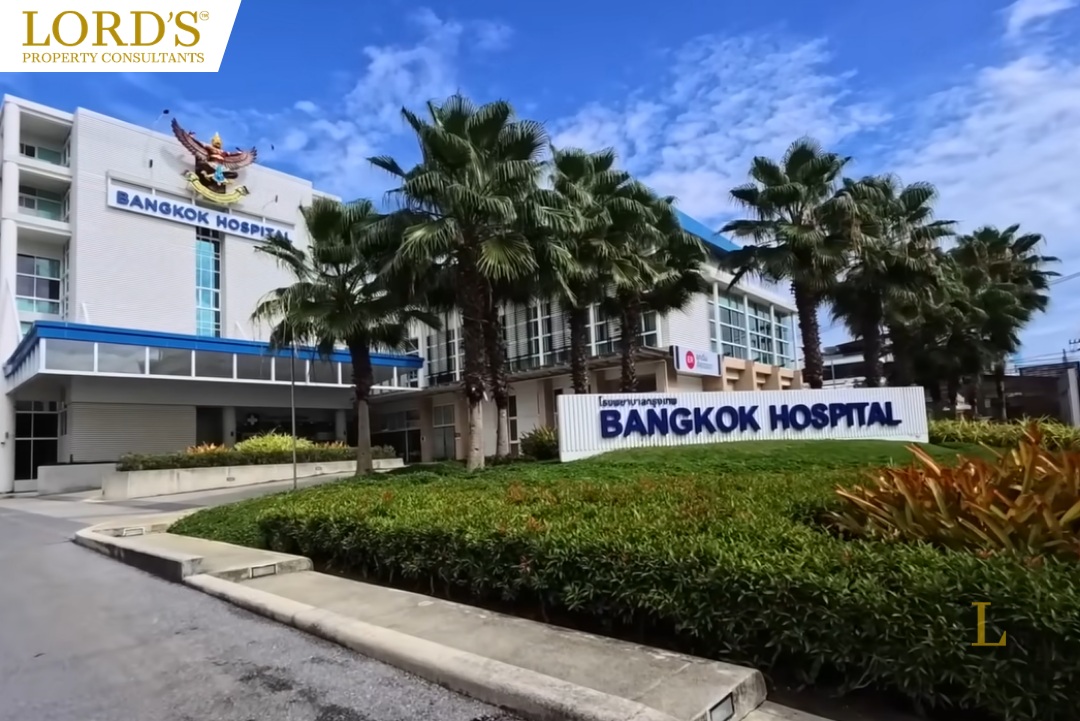
Outside the gate I drive the access soi and look for the low point between the estate and the main road. An estate that stays dry while its only access road sits under 30 centimetres of water has solved your property problem and not your life problem, which also affects how far you really are from a hospital in each Hua Hin golf community when it matters most.
Finally I ask the estate manager three direct questions and write down the answers. Which plots took water in the last three wet seasons. What was done about it. Who paid. Vague answers are an answer. Every one of these points belongs in your due diligence file alongside what to check in a Thai property sales agreement before you sign, and skipping them is a recurring theme in why some foreigners regret buying property in Thailand.
Is the rainy season a good time to buy in Hua Hin?
The rainy season is arguably the best time to view and the best time to negotiate, because you see the property under load and the market is quiet. Buyers who only ever visit in the cool season are making a twenty year decision on a four month sample.
Book the viewing trip for September or October, inside the window the Thai Meteorological Department treats as the rainy season, and try to be on the estate within an hour of a real downpour. In sixty minutes you will learn more about the drainage than any survey will tell you. You will also find sellers more responsive, since the transaction pipeline thins out once the seasonal residents fly home.
If you are not ready to commit, renting through one wet season on the estate you like is the cheapest due diligence available, a point we make in detail in renting versus buying in Hua Hin. When you are ready to move, the mechanics are set out in our guide to the process of buying property in Thailand for foreigners, and if the plan is to be here for the wet months as well as the good ones, start with what visa lets you live year-round on a Hua Hin golf course.
Frequently asked questions
Which Hua Hin golf course drains best after heavy rain?
The elevated courses in the foothills west of town shed water fastest, because gravity does most of the work before any pipe is involved. Flat inland layouts on heavier soil hold water in their low areas longest, sometimes for a full day after a major storm.
Do Hua Hin golf estates lose road access or power during the rainy season?
Short power interruptions during electrical storms are normal across Hua Hin and usually last minutes rather than hours. Access is more about the public soi outside the estate than the estate roads themselves, which is why the approach road is worth driving in bad weather before you buy.
Are green fees included in golf estate maintenance fees?
Rarely in full, and the arrangements differ sharply between developments, from discounted member rates to no playing rights at all. Confirm it in writing before you assume golf is bundled into your monthly charge.
Does Hua Hin flood as badly as Bangkok or southern Thailand?
No. Hua Hin’s flooding is typically short and localised, measured in centimetres and hours, and it is not comparable to the prolonged inundations seen in the deep south or in the central river plain.
Can I still play golf through the wet season in Hua Hin?
Yes, and most residents play more in the wet months than in the peak season. Rain generally falls in the afternoon, so early tee times are usually dry, and courses are far less crowded.
Should I buy a villa directly on the fairway or one row back?
Fairway frontage costs more and carries the higher runoff exposure if the plot sits below the hole. A plot one row back on higher ground often gives better long-term value, which is the trade-off examined in our comparison of on-course and near-course pricing.
Schlussfolgerung
Hua Hin’s rainy season is not the threat that buyers arriving from Europe imagine, and it is not the non-event that holiday marketing suggests either. The town centre floods occasionally and briefly. The golf estates west of it sit higher, drain faster and mostly carry on. Green fees do not fall, but the courses empty, and for a resident that is the better currency.
What decides your outcome is not the estate name on the gate. It is where your specific plot sits on the slope, what the club spends on its drainage each year, and whether anyone actually looked at the neighbouring boundary walls before contracts were signed. Get those three right and the wet season becomes the quietest, greenest, cheapest four months of your golfing year.
If you want a specific plot assessed before you commit, that is exactly the walk-through described above, and we are happy to do it with you.


Beteiligen Sie sich an der Diskussion