
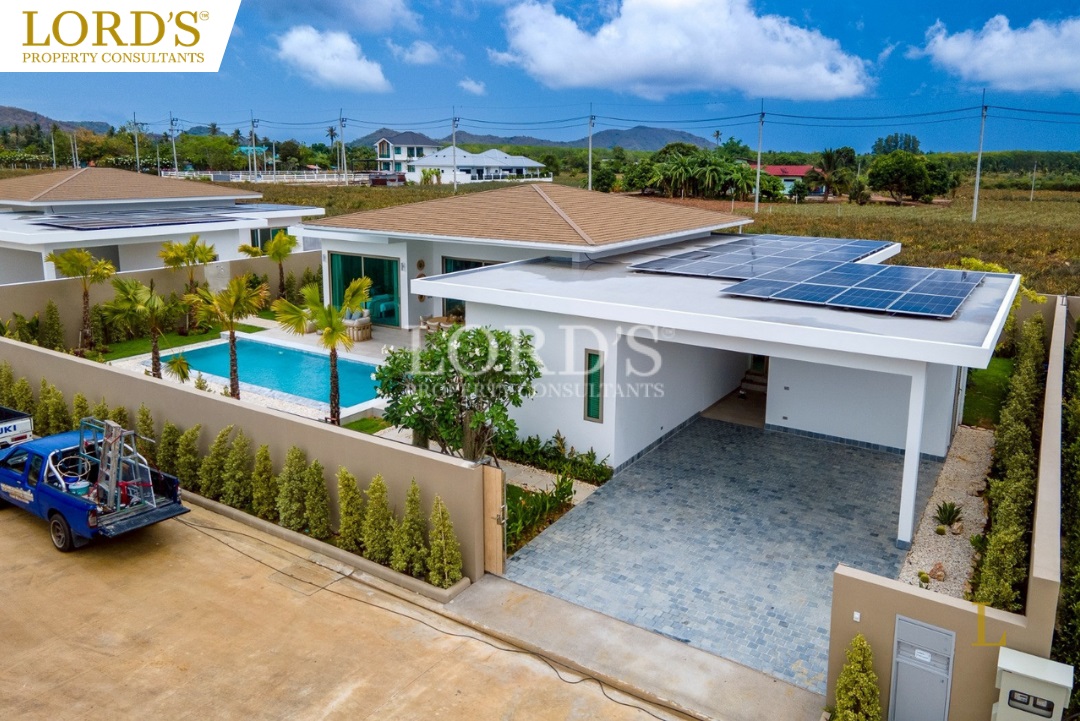
This stretch of the Gulf coast has a special pull. It is where Bangkok families keep their weekend homes, where European retirees settle for the calm and the golf, and where buyers who find Phuket too busy come to breathe. Four towns sit along the same shoreline, each with its own feel: lively Cha-Am, well-established Hua Hin, boutique Pranburi, and the wild, mountain-backed beaches of Sam Roi Yot. All are within easy reach of Bangkok, and all offer prices kinder than most Thai hotspots.
The catch is the same one every buyer in Thailand meets: the ownership rules are different from home, and one wrong step can cost you the property. This guide explains how it really works here, in plain words, whether you are a foreign buyer or a Thai national. By the end you will know what you can own, the safest way to hold it, what it costs, and which of these four areas fits your goal.
Table of Contents
The One Rule That Shapes Every Purchase
Start with the single fact behind every property decision on this coast: foreigners cannot own land in Thailand. The law reserves land for Thai nationals, and these towns are no exception. This is not a grey area you can argue around.
But most people miss the key details. Thai law treats the land and the building on it as two separate things. A foreigner can fully own a house or pool villa as a structure, even on land they are not allowed to own. They can also own a condo unit outright. So the real question is never “can I own property here?” The answer is yes. The real question is “which method fits the property I want, in the area I want?”
For Thai citizens the picture is simpler. A Thai national can buy and hold land freehold in their own name with no quota and no special structure. If you are Thai, the parts of this guide that matter most are the title deeds and the checks that protect you during the purchase.
The Four Ways to Hold Property
Across the condos, villas, and beachside plots of this coast, four legal routes do almost all the work. Each suits a different goal and property type.
| Method | Best for | What you own | How long it lasts |
|---|---|---|---|
| Freehold condo | Beach and town apartments | The unit, in your name | Forever |
| Leasehold | Villas, houses, land | The right to use it | 30 years, renewable |
| Superficies | A house on leased land | The building outright | Up to 30 years, inheritable |
| Usufruct | Lifetime use of land | The right to use and rent it | Your lifetime |
1. Freehold Condominium: The Simplest Route
Buying a condo unit is the cleanest way for a foreigner to truly own property here. Your name goes on the title, the ownership never expires, and you can sell it, rent it out, or leave it to your heirs with no time limit. There is one rule to remember: in any condo building, foreigners as a group can own no more than 49% of the total floor space. This is the foreign quota. Once it is full, the rest of the units can only be sold to Thai buyers or held on a lease, so always check that a unit still has foreign quota before you commit.
To register a condo in your name, you must bring the purchase money into Thailand from abroad in foreign currency and get a Foreign Exchange Transaction form from the bank to prove it. Skip this step and the Land Office will not transfer the unit. The registration itself is usually quick.
2. Leasehold: The Standard Choice for Villas
Most pool villas and houses on this coast sit in private developments, and the usual route for a foreign buyer is leasehold. You sign a lease registered at the Land Office that gives you the exclusive right to use the property for up to 30 years. It is noted on the title deed, so it is a real legal right, not a private handshake.
You will see villas advertised as “freehold” everywhere. Read that carefully. The wording is often aimed at Thai buyers or mixed-nationality couples, and what matters is the structure actually registered at the Land Office, not the brochure. You will also hear about “30 + 30 + 30” deals promising 90 years. Only the first 30-year term is guaranteed by law. Thailand’s Supreme Court has confirmed that automatic renewals written into a contract are not enforceable on their own. The later terms depend on the landowner agreeing again. A lease is still a sound option, as long as you go in knowing what is and is not promised.
3. Superficies and Usufruct: Extra Protection for Houses
These two rights sound technical but the idea is simple, and they are among the most underused tools for villa buyers in this region.
- Superficies gives you the legal right to own a building on land you do not own. Paired with a land lease, your name goes on the building permit and the house registration book as the real owner of the structure. If the lease ever ends, the landowner cannot simply take your house without paying you for it. This right can also be inherited, which a plain lease cannot always promise.
- Usufruct gives one person the right to use and earn income from land for their lifetime. It is popular with foreign spouses of Thai nationals. The Thai partner owns the land, and the foreign partner holds a registered usufruct, giving them the right to live there and rent it out for as long as they live.
Important: these rights can only be registered on land with a proper title deed, a Chanote or a Nor Sor 3 Gor. On weaker documents you cannot register them at all, which is one reason the title type matters so much, especially in the less-developed beach areas south of town.
The Thai Company Route: Proceed With Real Caution
You may hear that a foreigner can set up a Thai company to buy land. Technically a genuine, properly run Thai company can hold land. The problem is what most buyers are actually sold: a shell company where Thai “nominee” shareholders simply hold shares on the foreigner’s behalf and play no real part in the business.
This nominee setup is illegal, and in 2025 and 2026 Thailand launched its largest-ever crackdown on it. Tens of thousands of companies have been flagged, authorities now use software to spot fake shareholders, and penalties include heavy fines, prison time, and seizure of the land. Treat any agent who pushes a nominee company as a warning sign, not a clever shortcut. A company only makes sense when the Thai partners are genuine, active, and have really invested.
Title Deeds: The Document That Decides How Safe You Are
Whichever route you choose, the property sits on land, and that land has a title document. The type tells you how strong the ownership is and whether you can register a lease or mortgage against it. This matters as much for Thai buyers as for foreign ones. In built-up Hua Hin and Cha-Am a strong title is common, but in the newer beachfront pockets of Pranburi and Sam Roi Yot you must check, never assume.
| Title deed | What it means | Safety level |
|---|---|---|
| Chanote (Nor Sor 4) | Full freehold ownership, GPS-surveyed with exact boundaries. The gold standard. | Highest |
| Nor Sor 3 Gor | Confirmed possession with measured boundaries. Can be upgraded to Chanote. | Good |
| Nor Sor 3 | Possession right with rough boundaries. Boundary disputes are common. | Medium risk |
| Sor Kor 1 / Por Bor Tor | Old occupation claims, not real ownership. Cannot register rights. | Avoid |
The simple rule: aim for a Chanote, accept a Nor Sor 3 Gor after careful checks, and walk away from anything weaker unless you fully understand the risk. Always verify the deed at the local Land Office and confirm the boundaries and that no debts or claims are attached before you pay anything. Near the national park in Sam Roi Yot, also check building and zoning limits, as protected land and height rules can affect what you may build.
What It Costs to Buy and Hold
Beyond the price of the property, there are taxes and fees at the Land Office. Buyers and sellers often split these, so the figures below are the total amounts, not always your share.
| Cost | Freehold purchase | Leasehold registration |
|---|---|---|
| Transfer fee | 2% of the value | Not applicable |
| Lease registration | Not applicable | 1% of total lease value |
| Stamp duty | 0.5% (if no business tax) | 0.1% of lease value |
| Specific business tax | 3.3% if sold within 5 years | Not applicable |
| Yearly land & building tax | Low, often little for a home | Usually passed to the tenant |
As a rough guide, a freehold transfer adds up to roughly 2% to 6% in one-off costs depending on how long the seller owned the property, while registering a lease costs around 1.1% upfront. The ongoing yearly property tax in Thailand is low compared with most Western countries, which is part of what makes holding here comfortable over the long term.
The Four Towns: Which One Fits You?
These towns share a coastline but not a character. Picking the right one is half the decision, so here is an honest look at each, with typical prices and the ownership method that usually fits.
| Area | Character and buyer | Typical villa price/sqm | Usual fit |
|---|---|---|---|
| Cha-Am | Lively, affordable, mostly Thai weekenders. Condo oversupply means bargains but slower resale. | Lower end | Freehold condo |
| Hua Hin | The established hub. Hospitals, schools, golf, the widest choice and the easiest resale. | 38,000 to 120,000 THB | Either, by property |
| Pranburi | Quieter, boutique, eco-minded villas near nature. Popular with calm-seeking expats. | 26,000 to 56,000 THB | Lease + superficies |
| Sam Roi Yot | Wild beaches by the national park, mountain views, very peaceful and rural. | 32,000 to 59,000 THB | Lease + superficies |
Cha-Am: Value, With Eyes Open
Just north of Hua Hin, Cha-Am is cheaper and quieter midweek, busy with Bangkok visitors at weekends. The honest note most agents skip: it has a real condo oversupply, with thousands of unsold units, so prices are soft and resale can be slow. That makes it a value play for a freehold condo you plan to use and hold, rather than a quick flip. Buy near the beach and from a solid developer.
Hua Hin: The All-Rounder
Hua Hin is the established centre of the coast, the old royal summer retreat, with the best hospitals, international schools, golf courses, and by far the widest choice of property. Central and beachfront condos suit freehold ownership and draw the steadiest rental demand; pool villas in the golf estates inland suit a lease paired with a superficies right. Rental yields here commonly run 5% to 7%, and freehold condos resell fastest because any nationality can buy them.
Pranburi: Calm and Boutique
About 25 minutes south of Hua Hin, Pranburi trades nightlife for nature. It is known for smaller, design-led villa projects near Khao Kalok beach and mangrove forest, popular with buyers who want space and quiet. These are almost all landed homes, so the standard structure for foreigners is a registered land lease with a superficies right over the house. Prices per square metre are noticeably gentler than central Hua Hin.
Sam Roi Yot: Wild and Spacious
Further south again, Sam Roi Yot is the most rural of the four, framed by the limestone peaks of its famous national park and beaches like Dolphin Bay. You get big plots, mountain-and-sea views, and the lowest density of the coast. It suits buyers chasing a true retreat rather than rental income, which is thinner here. Expect leasehold-plus-superficies for villas, and take extra care with title and zoning so close to protected land.
Freehold or Leasehold: Which Is Right for You?
This is the decision most buyers wrestle with. Here is a straight answer based on what you are trying to achieve.
- Choose freehold if you want a condo, plan to hold long term, care about resale value, and want full control with no expiry. Freehold condos cost a little more and resell more easily, often at a 10% to 15% premium over leasehold units in the same building. On this coast that points to central Hua Hin, beachfront Cha-Am, or a beach condo near the village in any of the towns.
- Choose leasehold if you want a pool villa or house, prefer a lower upfront cost, or are not sure how many years you will stay. It is cheaper to register and gives you a fixed, comfortable period of use, which suits the villa buyer in Pranburi, Sam Roi Yot, or the Hua Hin golf estates.
If you are buying a landed home and want the strongest position, the smart move is to combine a registered lease with a superficies right over the building. You then control the land for the lease term and genuinely own the house on top of it. This kind of layered structure is exactly where guidance from a specialist like Lord’s Property Consultants earns its keep, because the protection lives in the fine detail of how each right is drafted and registered.
What Is Changing in 2026
The rules are under active discussion, so it helps to know what is real versus what is just talk.
- The 99-year lease proposal: the government has discussed replacing the 30-year lease cap with a 99-year term. As of 2026 it has not become law. Plan around the current 30-year rule and treat a longer term as a possible bonus, not a promise.
- The 49% condo quota: there have been proposals to raise the foreign ownership limit, but it remains at 49% for now.
- The nominee crackdown: this one is very real and active. Enforcement against fake company structures has never been stronger, which is the clearest signal yet to use only legitimate ownership routes.
Questions Buyers Ask Most
Can a foreigner buy a beach villa in Pranburi or Sam Roi Yot?
Yes. A foreigner can own the villa itself as a building. What they cannot own is the land underneath, so the land is usually held on a registered lease while the building is owned outright, often secured with a superficies right. Check the title and zoning carefully in these less-developed areas.
Is Cha-Am a good place to buy?
It offers the best value of the four, but it has a known condo oversupply, so resale can be slow. It suits a buyer who wants an affordable freehold condo to use and hold rather than flip quickly. Buy near the beach and from a reputable developer.
Which area gives the best rental income?
Hua Hin, comfortably. Its beachfront and central condos commonly yield around 5% to 7% thanks to steady tourist and expat demand. Pranburi and Sam Roi Yot are lifestyle buys with thinner rental markets, and Cha-Am sits in between.
What happens to my property when I die?
A freehold condo passes to your heirs with no time limit. A lease can be inherited too, but only for the years left on it. A superficies right is also inheritable, which is one reason it adds real value for landed homes.
Is it safe to buy land in my Thai spouse’s name?
It is common, but the land is legally theirs, not yours, and you must sign a declaration confirming the money was a gift. A registered usufruct in your name gives you the lifetime right to live there and rent it out, adding a layer of protection.
Can I get a mortgage as a foreigner?
It is difficult. Most Thai banks do not lend to foreign buyers for homes, so many pay in cash or arrange finance in their home country. A few lenders offer limited foreign loan programs, usually with strict conditions.
The Bottom Line
Owning property along this coast is very doable once you understand the one rule that shapes everything: you can own buildings and condos, but not the land, unless you are a Thai national. From there it comes down to matching the method to the property and the town. A beach or town condo means freehold ownership in your name, and points you toward Hua Hin or Cha-Am. A villa in quiet Pranburi or wild Sam Roi Yot means a lease, ideally strengthened with a superficies right over the house. Whatever you choose, the title deed decides how safe you are, so insist on a Chanote and verify it before any money moves.
Avoid the shortcuts that sound too good, especially nominee companies and 90-year lease promises, because those are exactly what the law is cracking down on right now. Get an independent lawyer to check every contract and register every right properly. Do that, and the reason you came to this calm stretch of coast, the sea air, the slower pace, a home to enjoy or pass on, becomes something you can hold with real confidence.


Join The Discussion