

Every month, more Europeans are quietly closing the door on grey skies, rising costs, and the relentless grind of a continent that feels increasingly expensive for what it delivers. They are landing in Thailand – and many of them are staying for good.
This is not a trend built on Instagram aesthetics. It is built on maths, quality of life, and a growing realization that the trade-offs most Europeans assume are significant turn out, in practice, to be very small. Better weather. Better value. Better healthcare. A culture that is genuinely warm rather than performatively so.
But moving countries is not something you improvise. The people who do it well – who arrive with clarity rather than chaos – share one thing in common: they planned the foundations first, then filled in the rest. This guide walks you through that process.
Table of Contents
Why Europeans Are Choosing Thailand
The most honest answer is financial arithmetic. A single person living comfortably in Munich, Amsterdam, or London might spend €3,500 to €5,000 a month on rent, food, transport, and general life. That same person in Chiang Mai or Hua Hin spends €1,200 to €2,000 – and often lives better by most measurable standards.
That gap compounds dramatically over years. For retirees on a fixed pension, it is the difference between comfort and anxiety. For remote workers, it is the difference between saving nothing and building genuine financial cushion. For younger people who want to start over without debt defining the next decade, it is simply a better calculation.
Beyond money, Thailand offers something harder to quantify: daily life at a lower temperature. Not just climatically, though the year-round warmth is real and consistently underestimated by people who have never lived through their fifteenth consecutive grey February. The pace is different. The social contract is different. The default emotional register of the culture – patient, respectful, unhurried – has a measurable effect on people who have been running on cortisol for years.
Healthcare closes the argument for many. Thailand’s private hospital network is world-class. Modern facilities, internationally trained doctors, and consultation costs that are a fraction of equivalent private care in Europe. For anyone over 50 making this decision, that matters enormously.
Step One: Get the Visa Right Before You Do Anything Else
This is the piece of advice most relocation guides bury or soften. Do not soften it. Your visa determines your legal right to be in the country, your ability to work, how long you can stay without interruption, and what happens if you need to extend or change your plans. Everything else you do – where you rent, how you structure your income, what healthcare plan you buy – depends on this decision. Get it wrong and you are doing expensive corrections later. Get it right and the rest of the structure sits cleanly on top of it.
Retirement Visa (Non-OA / Non-OX): For those over 50. Requires proof of financial means – either a deposit of ฿800,000 (~€21,000) in a Thai bank account, or monthly pension income of ฿65,000 (~€1,700), or a combination. Renewable annually. This is the most settled, low-maintenance route for retirees and gives you a genuine long-term foundation.
Thailand Elite Visa: A paid membership programme that gives you five to twenty years of legal residency depending on the tier chosen. No proof of employment or income required. No annual check-ins beyond what the card provides. The entry cost ranges from ฿600,000 to ฿2,000,000 (~€15,000 to €52,000), but for people who want absolute simplicity and are planning to stay long-term, the cost is often worth it.
Digital Nomad / Long-Term Resident (LTR) Visa: Launched in 2022, this is Thailand’s formal answer to the global remote worker market. Requires a minimum income of $80,000 USD per year (or $40,000 with a degree and two years of work experience). Valid for ten years, renewable. Comes with work-from-Thailand rights, 17% personal income tax cap, and fast-track airport processing. If you earn remotely in this income range, this is very likely your best option.
Non-B (Business/Work Visa): For those taking local employment or running a business in Thailand. Requires a work permit and employer sponsorship. If you are starting a business, the setup process involves registering a Thai company and understanding the rules around foreign business ownership – which is manageable but needs proper legal guidance.
Tourist Visa extended by Visa Runs: This is how many people start – a 60-day tourist visa extended by 30 days, then a border run, repeat. It works as a test period but it is not a long-term strategy. Immigration officials notice patterns, and the rules around back-to-back tourist entries have tightened. Use this period to explore, decide, and then move onto a proper visa before you need to.
Budget: What It Actually Costs to Move and Live
The question Europeans ask most is: how much do I need? There are two numbers to think about – the move itself, and the ongoing monthly cost.
The move: Budget €5,000 to €10,000 as a comfortable cushion for the transition period. This covers flights and shipping or storage of belongings, visa fees and legal costs if using a lawyer, one to three months of flexible accommodation while you get oriented, and a buffer for surprises. People who move on €3,000 usually manage. People with €10,000 as a foundation rarely feel stressed.
Monthly living costs in Hua Hin as a benchmark:
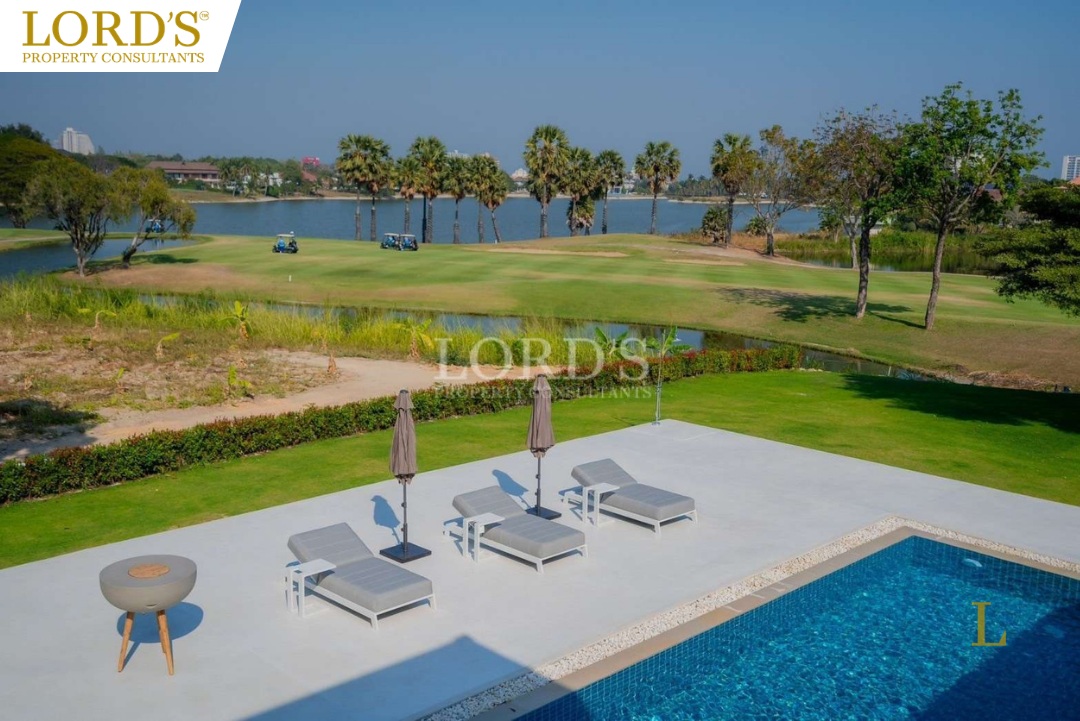
A one-bedroom condo in a good location rents for ฿12,000 to ฿25,000 per month (€320 to €660). A villa with a private pool typically runs ฿35,000 to ฿80,000 (€920 to €2,100). Local food is extraordinarily affordable – eating well from markets and Thai restaurants costs €150 to €250 a month. A car or motorbike adds €100 to €250 depending on what you drive. Health insurance, which you should not skip, costs €80 to €200 a month for solid international coverage. In total, a single person living comfortably but not extravagantly spends €1,300 to €2,000 monthly. A couple might spend €1,800 to €3,000. These are not minimum survival figures – they include a good quality of life.
Choosing Your City: The Honest Trade-offs
Bangkok is for people who want a city – infrastructure, career connections, international schools, a nightlife and cultural scene that rivals any European capital. It is not for people seeking tranquillity. Traffic is real. Pollution is real. But Bangkok delivers urban life at a fraction of the cost of London or Paris, and many Europeans genuinely thrive there.
Chiang Mai has built a global reputation among digital nomads and remote workers. The old city is beautiful, the cost of living is among the lowest in Thailand, and the community of international residents is large enough that you will never struggle to find your people. It is cooler, calmer, and far from the sea – which matters to some people and not at all to others.
Phuket has the beaches, the infrastructure, and the international airport. It is the most tourist-saturated of the major locations, which means higher prices and a less authentic day-to-day experience, but also the highest rental yields for property investors and excellent international healthcare and schools.
Hua Hin is the option that experienced movers increasingly settle on. Two hours south of Bangkok, clean beaches, a real town that functions year-round rather than emptying in the low season, excellent golf courses, top-tier private hospitals, and a community of long-term expats that gives the place genuine social fabric. It is not trying to be Phuket. It is calmer, more elegant, and significantly more affordable. For retirees, remote workers with families, and anyone who wants a genuine quality of life over Instagram-friendly scenery, Hua Hin consistently outperforms expectations.
Finding Somewhere to Live
The standard advice – and it is correct – is to arrive with two to four weeks of flexible accommodation booked and spend that time exploring before committing to anything long-term. What looks good on Google Maps and what feels right when you are walking the streets at 7am or 7pm are often very different things.
Short-term furnished apartments are easy to find in any of the major expat areas. Use this window to ride different neighbourhoods, check proximity to the markets and hospitals and roads you will actually use, talk to other expats who have been there longer than you, and visit the long-term options in person before signing anything.
Lease terms in Thailand are typically one year for condos and houses, sometimes shorter. Rental agreements are usually straightforward but should be reviewed before signing. Deposits are typically two months, with one month advance.
Healthcare and Insurance
Do not move to Thailand without health insurance. This is not a bureaucratic box-tick – it is the sensible thing to do in any country where your social security contributions do not follow you across borders.
The good news is that international health insurance covering Thailand is genuinely affordable. Expect to pay €80 to €200 per month depending on age, coverage level, and whether you want global or Asia-Pacific cover. Companies that consistently serve the Thailand expat market well include Cigna, AXA International, and Pacific Cross – but get quotes from a broker who specialises in expat cover rather than buying off a generic comparison site.
Thailand’s private hospital network, particularly in cities like Bangkok and Hua Hin (Hua Hin Hospital and Bangkok Hospital Hua Hin are both excellent), means that having insurance and having access to good care are not separate problems. They are solved together.
Working and Earning in Thailand
If your income comes from outside Thailand – a remote job, freelance clients in Europe, a pension, or investments – you are in the simplest position. You need the right visa (Elite, LTR, or for retirees the Non-OA), and outside of the LTR visa’s specific provisions, Thailand has historically not taxed foreign-source income that is not remitted in the same tax year it is earned. Tax laws here are an evolving area, and a local accountant is worth €200 a year to stay correctly positioned.
If you want to work locally, you need a work permit in addition to your visa. Local salaries are significantly lower than European equivalents, and the process of obtaining a work permit is tied to your employer or your registered Thai company. It is not complicated, but it is sequential – the right structure has to be in place before you start work, not after.
If you are starting a business, Thailand allows foreigners to own businesses in most sectors through a company structure that requires at least two Thai shareholders holding 51% of shares. There are exceptions and legal structures that experienced lawyers use to make this workable. Do not try to navigate this without professional help.
Cultural Adjustment: The Real Expectations
Thailand is not a difficult culture to live in, but it is different, and acknowledging that difference early makes the adjustment faster.
Thais are not evasive or passive – they are calibrated to avoid conflict and preserve harmony in ways that Europeans often misread as ambiguity. Directness that reads as assertive in Germany reads as rude in Thailand. Learning to communicate with patience, to acknowledge rather than demand, and to accept that problems often get resolved sideways rather than head-on will serve you better than any language app.
Learn basic Thai. Not because you need it to survive – you do not – but because the effort earns you genuine warmth. A foreigner who says sawasdee krap/ka, who wais appropriately, who shows they have made the effort to understand even a little of the culture, is treated measurably better than one who has not bothered. It signals respect. Respect is the currency that opens things here.
Buddhist culture shapes daily life in ways that are mostly background but occasionally front of stage. Temple dress codes, the reverence for the royal family, the cultural significance of certain dates and festivals – these are not inconveniences. They are the texture of the place you chose to live in.
Common Mistakes Worth Learning from Others
Moving on a tourist visa with no plan. The short stays add up quickly in cost and inconvenience, and immigration officials eventually take notice. Arrive as a tourist, but transition to a proper long-term visa within three to six months.
Signing a twelve-month lease in the first two weeks. You do not yet know which neighbourhood is right for you. Temporary accommodation first, always.
Underestimating the first six months financially. Setup costs – deposits, furnishings, insurance, transport, legal fees – front-load the experience. Budget for this period specifically, separately from your ongoing monthly costs.
Ignoring the importance of a good lawyer and accountant. Thai property and business law has genuine complexity for foreign residents. The cost of proper professional advice is trivial compared to the cost of fixing mistakes made without it.
Isolating yourself within the expat bubble. The expat community is invaluable for practical knowledge and social support. But if that is all you engage with, you are living in a facsimile of home rather than actually living in Thailand. Push yourself to interact with your neighbourhood, your local market, the culture around you. It is more rewarding – and it is why you came.
Your Moving Checklist
- Research and select your visa type based on your situation
- Begin the application process or consult a Thai immigration lawyer
- Set a realistic transition budget covering the first six months
- Research your target city and shortlist neighbourhoods
- Book three to four weeks of flexible accommodation for on-arrival exploration
- Arrange international health insurance before departure
- Sort your finances – notify your bank, research transferring money, consider a Wise or Revolut account for day-to-day use
- Deal with home country obligations – GP, dentist, any ongoing subscriptions, tax residency notifications
- Book your flight
- Arrive, explore, decide, settle
A Final Word
Moving from Europe to Thailand is genuinely one of the more life-changing decisions a person can make – in the best sense. The people who do it well are not running away from something. They are running toward a specific thing they have thought about clearly: more sun, more value, a pace of life that suits them, or a retirement that does not require compromise.
The bureaucratic part is manageable. The cultural adjustment is interesting rather than difficult. The financial case is almost always compelling.
What it requires is the same thing any good decision requires: honest preparation, the right information, and a willingness to take the first step.
lord’s Property Consultants is based in Hua Hin, Thailand. We work with international buyers and relocating Europeans to find the right property for long-term living and investment. Visit us at www.lordspropconsult.com
FAQs
How much money do I need to retire in Thailand as a European?
To live comfortably, a single retiree should budget between €1,200 and €2,000 per month, which covers high-quality housing, dining out, and healthcare. Legally, the Retirement Visa (Non-OA) requires either a ฿800,000 (~€21,000) deposit in a Thai bank or a certified monthly income of ฿65,000 (~€1,700). Many Europeans find their purchasing power nearly triples compared to cities like London or Munich, allowing for a lifestyle that includes private villas and premium amenities.
Which city is best for European expats moving to Thailand?
The choice depends on lifestyle priorities: Bangkok offers high-octane urban infrastructure, while Chiang Mai is the hub for digital nomads seeking lower costs. However, lord’s Property Consultants identifies Hua Hin as the premier choice for long-term relocation due to its balance of coastal elegance, world-class private hospitals, and a stable expat community that avoids the volatile tourist-trap feel of Phuket.
What are the requirements for the Thailand Digital Nomad Visa?
The Long-Term Resident (LTR) visa is the gold standard for remote workers, requiring an annual income of at least $80,000 USD (or $40,000 with a Master’s degree and relevant experience). It provides a 10-year residency, a 17% personal income tax cap, and fast-track airport processing. For those who don’t meet these high thresholds, the Thailand Elite Visa offers a path to long-term residency through a one-time membership fee, removing the need for monthly income proof.
How does healthcare in Thailand compare to European systems?
Thailand’s private healthcare system often exceeds European public standards in terms of speed and facility quality. In expat hubs like Hua Hin, facilities such as Bangkok Hospital provide internationally trained specialists with nearly zero wait times. While not free, costs are a fraction of Western private care; it is highly recommended to secure international health insurance to ensure seamless access to these top-tier medical networks.
Can foreigners own property or land in Thailand?
Foreigners can own 100% of a condominium unit freehold, provided the building maintains a 51% Thai-ownership ratio. Land ownership is generally restricted, but many Europeans utilize long-term 30-year leases or specific legal structures to hold villa assets. lord’s Property Consultants specializes in navigating these legal frameworks, ensuring that European buyers secure high-yield investments or retirement homes in Hua Hin that comply strictly with Thai property law.
What is the real cost of renting a villa in Hua Hin?
A modern villa with a private pool in a reputable Hua Hin development typically ranges from ฿35,000 to ฿80,000 per month (€920 to €2,100). This is significantly lower than equivalent luxury rentals in Southern Europe. lord’s Property Consultants advises new arrivals to start with short-term rentals to test specific neighborhoods before committing to the one-year leases standard in the Thai market.
Is it difficult for Europeans to adjust to Thai culture?
The primary adjustment is shifting from Western directness to the Thai Face culture, which prioritizes harmony and conflict avoidance. Success in Thailand relies on patience and Sanuk (the sense of playfulness in life). Learning basic Thai phrases and respecting local customs, such as appropriate dress in temples, bridges the cultural gap quickly, transforming a foreign environment into a welcoming long-term home.
What are the tax implications for Europeans living in Thailand?
Thailand has updated its tax codes, generally taxing foreign-sourced income if it is remitted into Thailand. However, specific visas like the LTR offer significant tax breaks, and double taxation agreements often exist between Thailand and European nations. Because tax laws are an evolving area, it is essential to consult a local professional to ensure your remote income or pension is structured efficiently.
Why is Hua Hin considered better than Phuket for retirees?
Hua Hin offers a more authentic and gentle pace of life compared to the high-traffic, tourist-heavy environment of Phuket. It benefits from its proximity to Bangkok, superior golf courses, and a lower overall cost of living. lord’s Property Consultants highlights that Hua Hin’s infrastructure is designed for year-round living rather than seasonal tourism, providing a more stable social fabric for Europeans.
What common mistakes should I avoid when moving to Thailand?
The most frequent errors include signing long-term leases within the first week of arrival and relying on visa runs rather than securing a formal long-term visa. To ensure a chaos-free transition, advocates suggest a boots-on-the-ground approach: spend your first month in flexible accommodation to vet neighborhoods personally and engage professional legal help for visas and property contracts to avoid costly mistakes.




Join The Discussion