What Happens to Your Villa If the Golf Course Closes or Changes Owners in Hua Hin?
Quick answer
Your villa, your land title and your right to live there stay exactly the same if a Hua Hin golf course closes or is sold. What can change is the view behind your garden, your golf membership, the estate's upkeep and, in a full closure, your resale value. How exposed you are depends on who holds the title to the course land and what the estate's approved layout protects.
Golf estates are some of the most sought-after addresses in Hua Hin, from Black Mountain and Palm Hills to Banyan and Springfield. Buyers pay for the green outlook, the clubhouse and the quiet. Very few ask the harder question before signing: the course is a business, so what happens to my home if that business changes hands or stops trading? Below, I answer that question the way I answer it for clients in our office, whether they are buying a villa or renting one.
Who actually owns the golf course next to your villa?
In most Hua Hin golf estates, the course sits on its own title deed held by the club operating company, separate from your plot and from the estate's common areas.
Owning a villa beside the 9th fairway gives you no ownership share in the fairway itself.
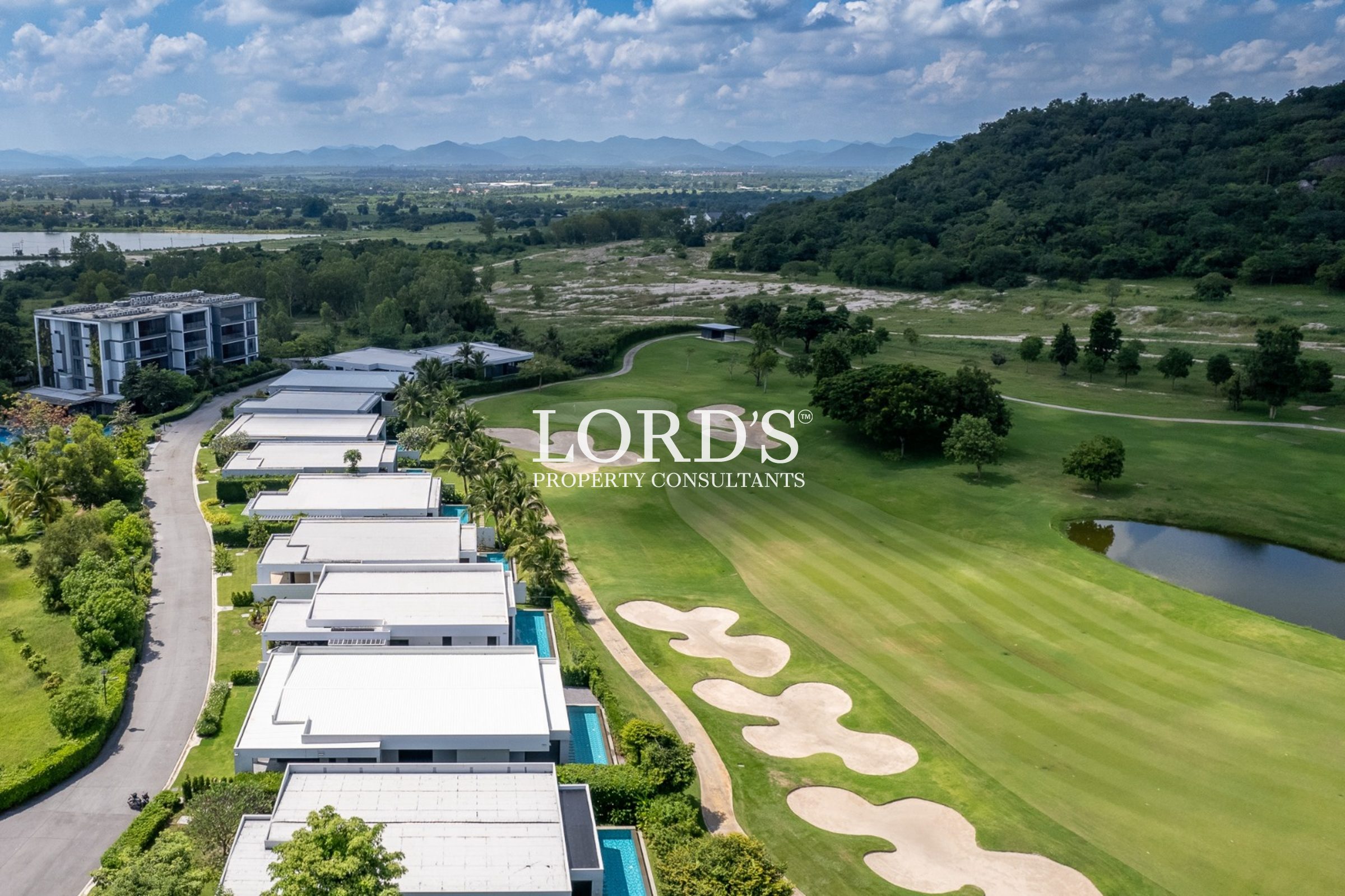
A typical golf estate has three layers of land. Your private plot carries its own chanote in your name, or in your company or lease structure if you are a foreign buyer. The estate roads, gates, drainage and green spaces are the project's public utilities under Thai land allocation rules. The course, clubhouse and driving range are usually commercial land owned by the golf company, which may or may not be the same company that developed the houses.
Can a new owner build on the fairways behind your villa?
A new owner can only develop land that was never recorded as an estate facility, and only within zoning and permit limits.
Areas registered as public utilities in the approved allocation layout are protected for residents; a separately titled course generally has no such protection beyond planning rules.
Thai law has tightened in buyers' favour here. Under the Land Allocation Act (No. 3), in force since 1 March 2026, facilities such as roads, parks and playgrounds in an allocation project are treated as easements that benefit buyers, and the developer must maintain them to standard, backed by a bank guarantee. The key question is whether the green space behind your house is one of those registered facilities or part of the commercial golf plot.
In practice, a new course owner is far more likely to refurbish, rebrand or change membership pricing than to bulldoze fairways. Land around Hua Hin's established courses is valued for exactly what it is, and redeveloping a working course needs new permits and usually faces strong resident resistance. The risk is real but concentrated in courses that are losing money or sit on land with obvious development potential.
From my desk
When a client falls in love with a fairway-facing villa, the first document I ask to see is not the villa's chanote. It is the title and the approved project layout for the land behind it. Over the years I have seen buyers assume the green view was guaranteed, only to learn the strip behind the garden belonged to the club and was zoned for future units. A ten-minute check at the Land Office before the deposit would have changed which plot they chose. A view you do not control should never be the main reason you pay a premium.
How much value can a villa lose if the golf course closes?
A peer-reviewed study found that home prices in golf communities fell by 17% after the course closed, erasing a 9% premium those homes had held over comparable non-golf homes.
Fairway-facing properties usually take the largest hit because they paid the largest premium.
The research, published as a peer-reviewed study of shuttered golf courses in the Journal of Sustainable Real Estate, tracked sales before and after closures and found that homes adjacent to the course lost value as well. The data comes from the United States, but the logic carries to Hua Hin: buyers pay extra for a maintained landscape, and an overgrown, fenced-off course reverses that.
An ownership change is a very different event. A sale to a better-funded operator often protects or lifts values, because the new owner invests in greens, clubhouse and service. The table below sets out how each scenario typically plays out for owners and tenants.
What changes
New owner keeps the course
Temporary closure for renovation
Permanent closure
Your title and right to live there
Unchanged
Unchanged
Unchanged
View behind your villa
Usually same or better
Construction for months
Overgrowth or new building risk
Golf membership
Honoured, repriced or replaced per contract
Suspended, sometimes extended
Ends; refund depends on contract
Estate roads, gates, security
Normal
Normal
Normal if a juristic person runs them; at risk if the club did
Resale value
Stable or rising
Short dip in buyer interest
Studies show around 17% drop
Rental demand
Stable
Golf tenants pause, long-stay tenants stay
Golf-led demand falls; family demand holds if estate is well run
Owners who rent out their villa should weigh this against current rental yields in Hua Hin, because golf-dependent demand is the first to soften in a closure.
Who maintains roads, security and common areas if the club owner goes bust?
Residents can take over the estate's roads, gates and common facilities by forming a housing estate juristic person, which then collects common fees and manages upkeep.
Since 1 March 2026, owners of at least half the sold plots can apply to set one up themselves if the developer fails its duties.
The Land Allocation Act (No. 3), in force since 1 March 2026 also requires the developer to hand its maintenance guarantee funds to the juristic person when facilities are transferred, allows common fees to vary by plot size or land use, and raises fines on developers who ignore committee orders to between 50,000 and 100,000 baht. For residents of an estate where the golf company also ran security and gardening, that is a meaningful safety net.
The weak point is estates where no juristic person was ever formed and everything, from the guards to street lights, runs through the club. If that club collapses, residents must organise quickly. Before buying, read our breakdown of golf estate HOA and CAM fees in Hua Hin to see who collects what, and check how security on Hua Hin golf estates is organised in the project you are considering.
What happens to your golf membership and common fees after a sale?
Your golf membership is a contract with the club company, so a new owner may honour it, reprice it or replace it, depending on what that contract says about transfer of the business.
Estate common fees are separate and continue to be owed to whoever manages the estate's facilities.
Many villa sales in Hua Hin are marketed with membership "included", but the wording matters. A lifetime membership attached to the plot is stronger than a promotional membership granted to the first buyer only. Look for clauses on assignment, what happens on a change of control, and whether membership passes to the next buyer when you sell. Our guide on whether you get free golf when you buy a golf course villa covers the common membership models.
If you hardly play, a membership change matters far less than the condition of the estate. That is one reason many non-golfers still buy on courses, as explained in our article on buying on a golf course in Hua Hin if you don't play golf.
What should tenants renting a golf course villa know?
Your lease is with the villa owner, not the golf club, so a course sale or closure does not end your tenancy.
Course access, a shuttle or a guaranteed outlook only bind anyone if they are written into your lease.
Renters often get the best of both worlds: the lifestyle without the long-term exposure. If a course closes mid-lease, you can usually move at the end of your term without a loss. Ask the owner or agent to state clearly whether green fees, clubhouse use or gym access come with the rental, and for longer leases, whether rent can be renegotiated if those amenities disappear. If you are weighing the two paths, our comparison of renting versus buying in Hua Hin lays out the costs side by side.
What should you check before buying a golf course villa in Hua Hin?
Before paying a deposit, verify who holds title to the course land, what the approved allocation layout protects, whether a housing estate juristic person exists, how healthy the club is financially, and whether your membership transfers.
These five checks tell you how much of your villa's value depends on someone else's business.
Golf villa due-diligence checklist
Course title deed: who owns the course land, and is it mortgaged?
Approved project layout: which green areas are registered estate facilities?
Juristic person: registered or not, and who currently runs security and roads?
Club health: years of operation, recent ownership changes, visible maintenance on greens and clubhouse.
Membership terms: attached to the plot or the person, and what happens on a sale of the club.
Sales contract: are promised facilities written in, not just shown in the brochure?
From my desk
The question I now ask every client is simple: would you still be happy with this villa if the course became a field tomorrow? If the answer is yes, because the house, the plot, the neighbours and the estate management are good on their own, the golf course is a bonus and the risk is small. If the answer is no, we either look for a plot where the outlook is protected or we negotiate the price down to reflect the risk. That one question has saved more clients from overpaying than any market report I could show them.
Do I lose my villa if the golf course company goes bankrupt?
No. Your plot and house are held on your own title or lease, which the club's creditors cannot touch.
Can residents buy the golf course if it is put up for sale?
Yes, residents can form a company or work through their juristic person to bid for the course, as some communities abroad have done. The challenge is funding ongoing maintenance, which can cost far more than the purchase price over time.
Will my common fees go up after the course changes owners?
Estate common fees only change through the estate's own management, not automatically with a club sale. Club fees and membership dues, however, can be repriced by the new owner within the limits of your contract.
Is a near-course villa safer than an on-course villa?
Yes, from a value-risk view, because it pays a smaller golf premium and loses less if the course closes. You give up the direct fairway outlook in exchange.
Does a golf course closure affect my villa insurance?
Usually not directly, since your policy covers the building and contents rather than the view. It is still worth reviewing your cover, and our guide on insuring a golf course villa in Thailand explains what to look for.
Should I avoid golf estates in Hua Hin altogether?
No. Hua Hin's established courses have long operating histories, and a well-managed estate keeps its appeal even through an ownership change. The goal is to buy with your eyes open, not to avoid the lifestyle.
Conclusion
A golf course closing or changing owners never takes away your villa or your title in Hua Hin. What it can change is the view, your membership, the estate's upkeep and your resale price, and the size of that risk is decided long before any sale, by how the course land is titled and how the estate is managed. A new owner who invests is often good news. A permanent closure is the real threat, and the evidence shows it can cost golf community homes around 17% of their value.
The fix is straightforward: check the course title, the approved layout, the juristic person and the membership contract before you commit, and buy a villa you would love even without the fairway. Whether you are looking to buy a golf course villa or rent one first to test the lifestyle, our team in Hua Hin can run these checks with you and show you estates where the outlook and management are on solid ground. If you are still deciding between a lifestyle home and an investment, our article on long-term investment versus lifestyle purchases in Thailand is a useful place to start.
Buying or renting on a Hua Hin golf estate?
We will check the course title, estate management and membership terms with you.