Fairway Villa Holes to Avoid in Hua Hin: Plot Position Explained
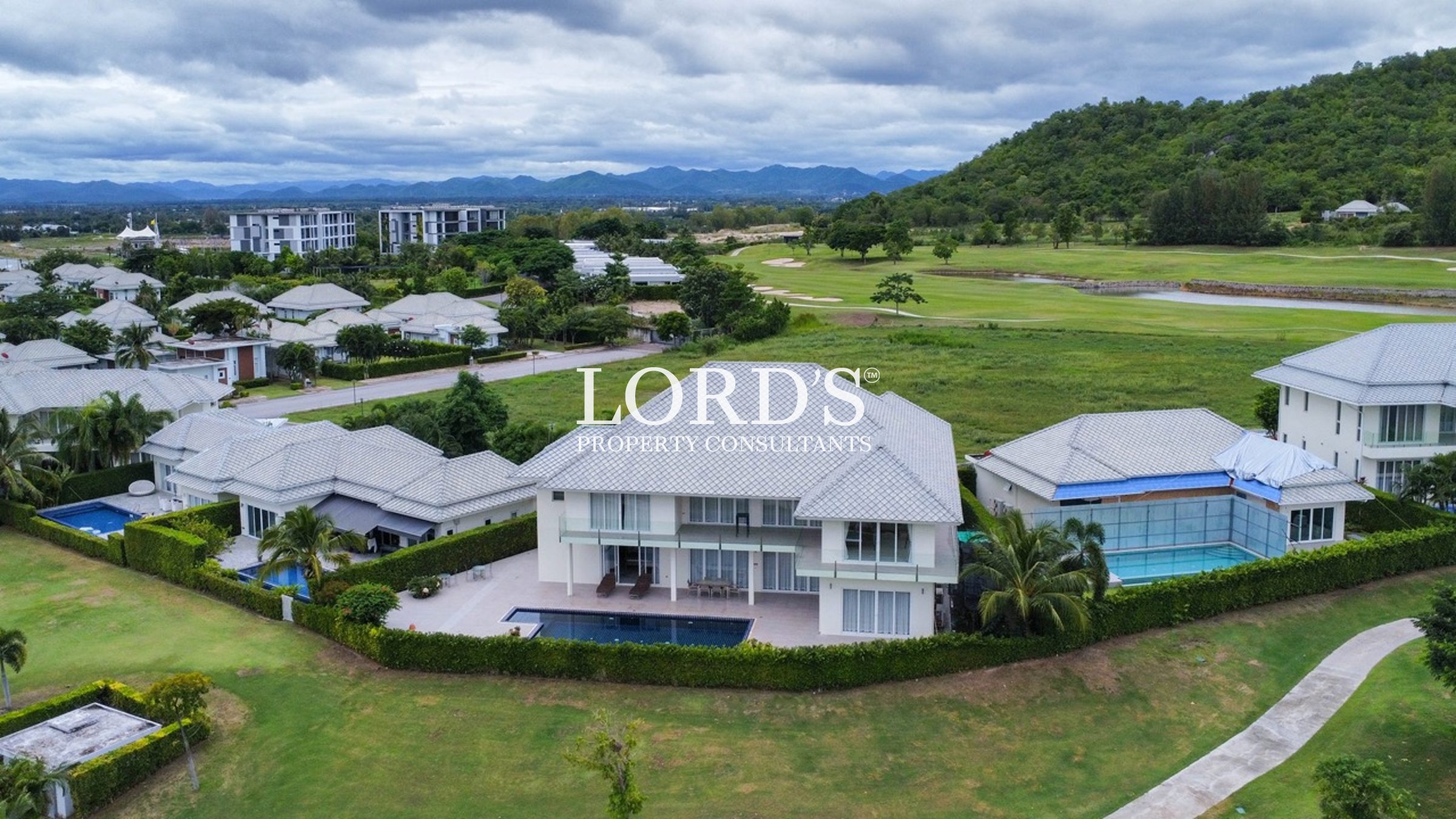
The holes to avoid when buying a fairway villa are long par 4s and par 5s where the plot sits in the drive landing zone, roughly 165 to 230 metres from the tees most golfers actually play, on either side of the fairway. Plots beside the first holes of each nine, and on either side of a dogleg corner, carry the same risk. The safest positions are behind a green, beside a par 3, or across a lake or wide hazard from play.
Most buyers I meet choose the villa first and look at the hole afterwards. I would reverse that order. On a Hua Hin golf estate, two villas with identical floor plans can sit two hundred metres apart and offer completely different daily lives, and the difference comes down to which hole they face and where on that hole they sit. What follows is how I read a hole before I let anyone fall in love with the house beside it, whether they plan to buy or to rent.
Key takeaways
The riskiest strip of any long hole is the drive landing zone, about 165 to 230 metres from the tee.
Left and right misses are almost equal for most golfers, so a left-side plot is not automatically safe.
Holes 1 and 10 deserve extra caution because cold first swings, queues and dawn starts all meet there.
Measure from the tees golfers really use, not the championship tee printed in the brochure.
Plots behind greens or across water are the easiest to live in, let and resell.
Which holes are the riskiest to buy a villa beside?
Long par 4s and par 5s are the riskiest holes, because they are where golfers hit the driver, the club they control least.
The plots that take the most balls sit beside the drive landing zone, roughly 165 to 230 metres from the tee, with par 5s adding a second landing zone for the long second shot.
The distances come from real play rather than guesswork. The Arccos 2026 Driving Distance Report, built from nearly 10 million driver tee shots recorded during 2025, puts the average male amateur drive at 224 yards, about 205 metres. Golfers off scratch to 4.9 average 244 yards (223 metres), while 30-plus handicappers average 181 yards (166 metres). Put those together and you have the band where most drives come to rest, and the band where your garden should not be.
Accuracy is the bigger issue. In the same Arccos dataset, even the best amateur group hit only about half of their fairways, and 30-plus handicappers found a penalty or recovery situation on 45 percent of their drives, against 12 percent for low handicappers. On a resort course that welcomes thousands of visiting golfers a year, a large share of drives past your boundary come from exactly the players most likely to miss.
Par 3s behave very differently. Golfers hit irons, the shots are shorter and better controlled, and the ball usually finishes near the green. That is why the hole number on a scorecard matters less than the hole type, and why I always ask "par what?" before I ask "how many bedrooms?"
Stray ball risk along a typical long par 4 (distance from the regular men's tee)
From the tee
Ball risk
Notes
0 to 150 m
Low
Short of the main landing band
165 to 230 m
Highest
Drive landing zone on both sides of the fairway
230 m to green
Moderate
Approach and lay-up misses
Behind green
Low
Occasional long approaches only
The highest-risk band applies to both sides of the fairway. Behind the tee is low ball risk but high noise from waiting groups and carts.
Is the right side of the fairway really the danger side?
Only slightly, and mainly on holes busy with high-handicap golfers.
For most golfers, misses to the left and right off the tee are close to equal, so a plot on the left side of a landing zone carries nearly the same risk as one on the right.
The old rule says right-handed golfers slice, so avoid the right side. The tracking data is more nuanced. Shot Scope miss data published by MyGolfSpy shows left and right misses within a point or two of each other for golfers from scratch up to a 20 handicap. A 20 handicapper, for example, misses left and right about 26 percent of the time each. Only at a 25 handicap does the slice clearly appear, with 28 percent of drives missing right against 19 percent missing left.
There is a sound reason for the even spread. Golfers who fight a slice tend to aim left to allow for it, and on the days the slice does not come, the ball finishes left. So the right side is marginally worse on a resort course full of holiday golfers, and the left side is far from immune. When a seller tells me a villa is "on the safe side," I treat it as the start of a conversation rather than the end of one.
Why are the first holes of each nine a special case?
Holes 1 and 10 combine the least predictable drives of the round with the heaviest traffic and the earliest starts.
A plot in the drive zone of an opening hole gets more balls, more carts and more noise from first light than an equivalent plot further into the round.
Golfers on the first tee have often just stepped out of the car, the muscles are cold, and a group or two are usually standing behind them watching. Those are poor conditions for a straight drive. Opening holes also see every group on the course pass through them, including any tournament or society day using a shotgun start, and the first tee times of the morning mean carts and chatter close to dawn. In high season, roughly November to April, the queue on the first tee can be steady from early morning, and the best months to play golf in Hua Hin are exactly the months a holiday tenant expects a quiet garden.
From my experience
When I walk a plot with a buyer, I look at the scorecard before I look at the house. If the villa sits in the drive zone of hole 1 or hole 10, I say so plainly, even when everything else about the property is right. I have stood on more than one opening tee with clients, watched the morning's first few groups play, and seen a buyer change their mind about a villa they had loved on paper. That half hour is the cheapest due diligence you will ever do.
The opening holes are not automatically a bad buy. A plot behind the first green, or one set far back from the first fairway across water, can be excellent. The caution applies to the landing zone, and it applies across Hua Hin’s estates, whether you are comparing Palm Hills and Black Mountain or reading our Pineapple Valley (Banyan) property guide. Black Mountain’s own course-side villa information places those villas beside the opening holes of its North nine, which is a good example of why the plot, not the estate name, decides your exposure.
Which holes are usually safer to live beside?
Par 3s, plots behind greens, and plots separated from play by a lake or wide hazard are the safest positions on a golf estate.
Shorter, more controlled shots and natural buffers keep stray balls away while preserving the open view that makes a fairway villa worth buying.
Each safer position has a trade-off worth knowing. Behind a tee box, balls are rarely a problem, but every group stops, talks and waits right beside your boundary. Near holes 9 and 18 you get clubhouse convenience and heavier cart traffic. A plot across a lake usually costs more, and in my view it is the premium that pays for itself, both in daily life and when you come to let or sell. The table below sets out how I weigh each position.
Which tee should you measure a plot's position from?
Measure from the tees most golfers actually play, usually the middle men's tees, not the championship tee shown on the course map.
Measuring from the back tee pushes the landing zone further down the hole on paper, which can make a plot that sits in the real danger band look safely short of it.
Black Mountain is a useful local example. The club itself describes its White tees, at roughly 6,300 yards, as the most popular set, with the Yellow tees at about 6,000 yards recommended for higher handicap and senior players, and the Blue tees reserved for longer hitters. On a single hole, those tee sets can sit tens of metres apart, and so can the landing zones they create.
Hua Hin's golfing population adds one more twist. Many of the regular players on local estates are retirees, and the Arccos data shows golfers in their 70s drive the shortest, around 190 yards, while hitting the most fairways of any age group. On courses with a strong retired membership, the landing zone shifts slightly closer to the tee and the misses get smaller, while visiting holiday golfers push the other way. In practice I check the band from both the Yellow and White tees and treat the overlap as the zone to avoid.
Does the hole a villa faces change rental demand and resale value?
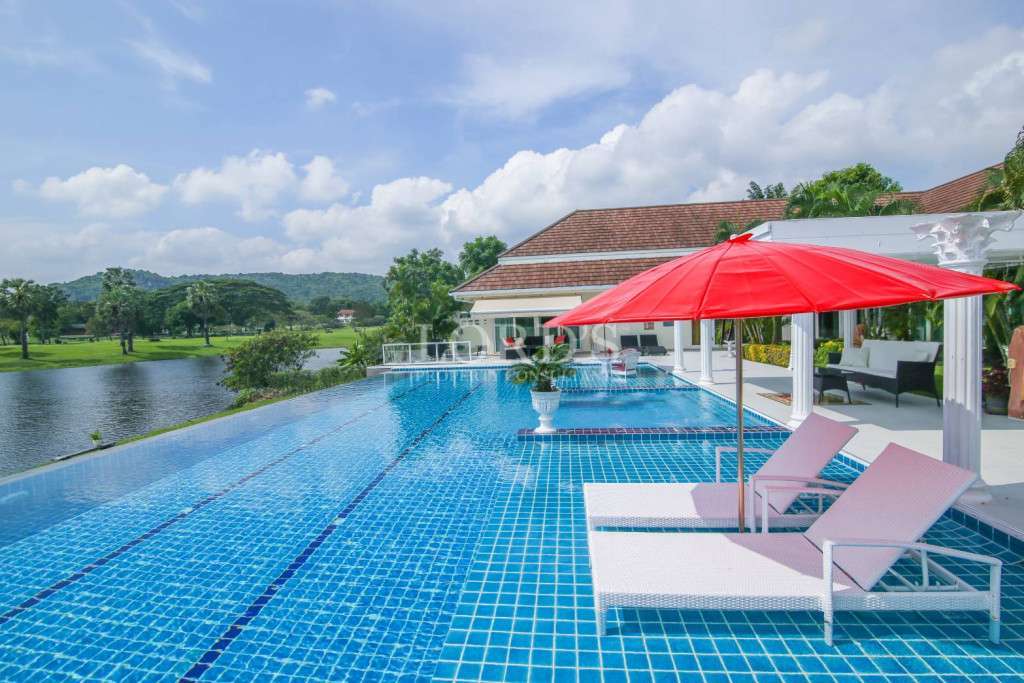
Yes. Villas behind greens or across water let more easily and resell faster than villas in a landing zone, because the outlook is the same and the drawbacks are not.
Tenants and second-hand buyers ask the same questions you are asking now, and a well-placed plot answers them before they are raised.
The tenants who come to us for golf villas, whom I describe in more detail in who rents golf villas in Hua Hin, usually ask two things about the garden before they ask about the kitchen: will balls land in the pool, and when do the mowers start? A villa across a lake answers both in one sentence. A villa in a landing zone needs explaining at every viewing, and in my experience that explaining shows up as longer gaps between lets and harder negotiations when the owner eventually sells. If you are buying partly for income, factor plot position into any projection of rental yields in Hua Hin rather than assuming every fairway villa earns the same.
For renters the logic runs the other way and works in your favour. A season in a course-facing villa is the cheapest possible way to learn which hole positions you can live with, which is why I often suggest renting before buying in Hua Hin. If the fairway premium itself is the question, compare it honestly against a villa one row back using our breakdown of on the golf course vs near the golf course prices.
What else should you check once the hole looks right?
Check the running costs, the insurance, the membership terms and the long-term future of the course itself.
A perfectly positioned plot can still disappoint if the estate fees, cover or club arrangements do not match what you expected.
Non-golfers often get the most out of a well-placed fairway plot, because they value the view and the quiet more than the tee times. If that describes you, our article on buying on a Hua Hin golf course if you don't play golf is worth reading alongside this one.
Frequently asked questions
Which side of the fairway is safest for a villa?
Neither side is reliably safe within the drive landing zone, because left and right misses are close to equal for most golfers. Position along the hole matters far more than side, so a plot behind a green beats a "safe side" plot in the landing zone every time.
How far from the tee is the danger zone on a golf hole?
On long par 4s and par 5s, most drives finish roughly 165 to 230 metres from the regular men's tee. Plots on either side of that band take the most balls, and par 5s add a second risky band where the long second shot lands.
Are villas beside par 3 holes a good buy?
Usually yes, because golfers hit shorter, more controlled iron shots on par 3s and the ball rarely strays far from the green. Check the tee position, though, since groups waiting on a par 3 tee can be audible from a nearby terrace.
Why should I avoid plots beside hole 1 or hole 10?
Opening holes see cold first swings, a queue of waiting groups and the earliest tee times of the day. A plot in their drive zone takes more balls and more early noise than a similar plot later in the round.
Can foreigners own a fairway villa in Hua Hin?
Foreigners can own the house but generally not the land, which is usually held on a registered lease of up to 30 years. Our guide to leasehold vs freehold in Thailand explains how the structure works and what to check before you sign.
Should I rent a fairway villa before I buy one?
If you are unsure how you will feel about golfers, carts and early maintenance, a season of renting is the cheapest test there is. It also lets you compare hole positions on the same estate before committing to one.
Conclusion: choose the hole first, then the house
A fairway villa is one of the few purchases where the plot matters more than the developer, the floor plan or the price per square metre. Avoid the drive landing zones of long par 4s and par 5s on both sides of the fairway, be cautious with dogleg corners and the opening holes of each nine, and measure from the tees golfers actually play. Favour plots behind greens, beside par 3s or across water, and you keep the open view while losing most of the drawbacks.
Whether you want to buy or rent on a Hua Hin golf estate, start with the scorecard and a morning on the tee before you fall for the kitchen. If you would like a second opinion on a specific plot, or want us to shortlist villas by hole position rather than by brochure, that is exactly the work we do every week.
Looking at a fairway villa in Hua Hin?
Send us the estate and plot, and we will tell you which hole it faces and how it rates before you view.